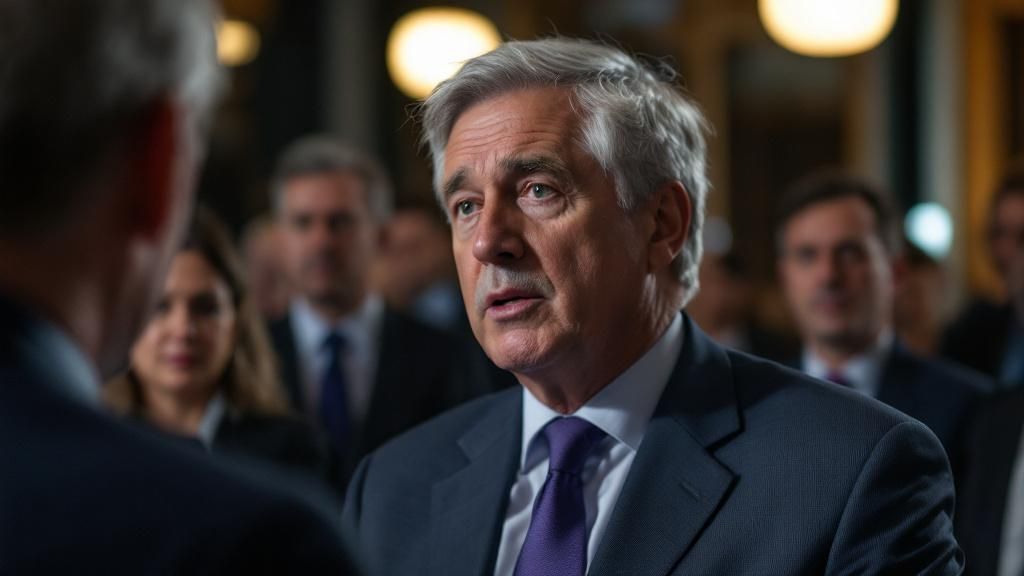

As families throughout the country grapple with rising energy bills and inflation climbing to unprecedented levels, the opposition figurehead has launched a scathing attack on the Government’s response to the cost-of-living emergency. In a tense Commons clash, the opposition has challenged the administration’s insufficient relief measures, pressing for more meaningful intervention to help financially stretched families. This article examines the intensifying tensions centred on the crisis and considers the contrasting proposals for financial support.
The Opposition’s Criticism of Government Policies
The opposition leader has intensified scrutiny of the government’s handling of the mounting cost-of-living emergency, asserting that present interventions prove inadequate in addressing the scale of hardship facing British households. During parliamentary exchanges, the opposition has articulated a detailed critique covering inadequate financial support, limited involvement in energy markets, and a perceived lack of urgency in tackling inflation. The opposition argues that whilst families struggle with extraordinary costs, the government’s fragmented strategy only addresses surface issues rather than dealing with fundamental causes of financial hardship.
Central to the opposition’s case is the claim that the government has badly miscalculated both the scale and length of the crisis. Opposition representatives have underscored data indicating that millions of households now face genuine hardship, with many compelled to decide between heating and eating. The opposition argues that the government’s early action underestimated the crisis’s effect, leading to support mechanisms that were found wanting when the situation got worse further. This error of judgment, they argue, demonstrates broader failures in forecasting accuracy and preparedness.
Inadequate Assistance Provisions
The opposition has consistently challenged government support schemes as insufficient and poorly targeted, arguing that energy price cap mechanisms fail to protect at-risk groups effectively. Critics point out that whilst the government has implemented multiple support measures, such as grants and council tax rebates, these initiatives offer short-term assistance without resolving underlying problems. The opposition contends that income-assessed support remain excessively narrow, leaving out millions of employed households who yet contend with mounting expenses. Furthermore, they argue the government’s approach falls short of the ambition necessary to confront such an unparalleled economic difficulty.
Opposition assessment indicates that present welfare systems negatively impact those earning mid-range salaries who sit outside qualifying criteria for focused aid. The party has proposed alternative frameworks centred on across-the-board allowances, expanded welfare provisions, and state involvement in power industries to control costs. They highlight that interim steps, whilst welcome, cannot substitute for comprehensive structural reform. The opposition argues that lacking major policy reform and enhanced government funding, working people will continue experiencing acute financial strain in the coming period.
Long-range Financial Policy Challenges
Beyond pressing crisis intervention, the opposition has raised fundamental questions regarding the state’s long-term economic direction and competitive position. Opposition analysts argue that the current approach emphasises short-term political considerations over durable economic planning, risking damage to Britain’s long-term prosperity. They contend that without strategic investment in clean energy infrastructure, industrial capacity, and human capital development, the nation risks prolonged economic stagnation. The opposition emphasises that addressing cost of living pressures requires wide-ranging reforms addressing productive efficiency, technological innovation, and industry development alongside immediate relief measures.
The opposition has outlined concerns that government policy lacks consistency across different areas, with energy policy, industrial strategy, and fiscal measures working independently rather than as integrated components. Critics argue this piecemeal framework impedes tackling of persistent inflation and fundamental economic problems. The opposition calls for a unified national approach covering energy transition, manufacturing revival, and skills development. They maintain that genuine crisis resolution necessitates radical policy overhaul rather than gradual modifications to existing frameworks.
Government’s Defence and Counterarguments
The government has firmly defended its economic policy, arguing that the affordability pressures are chiefly driven by international forces beyond Westminster’s direct control. Ministers have underscored the unprecedented nature of the energy emergency, stemming from geopolitical conflicts and international supply chain disruptions. They argue that their tailored support schemes, encompassing the energy price ceiling and affordability support payments, constitute a prudent and financially sound approach. The Finance Ministry maintains that excessive spending could worsen inflation even more, undermining long-term economic stability and eventually prejudicing the same families the opposition claims to champion.
Government officials have emphasised the substantial financial assistance currently in place, totalling billions of pounds in immediate aid to vulnerable households. They contend that their measures reconcile immediate relief with prudent fiscal management, averting the debt spiral that uncontrolled expenditure could provoke. Ministers also highlight their work in boosting energy security through sustainable energy projects and market diversification. The government argues that whilst the opposition offers sympathetic language, their proposed solutions lack financial viability and would prove unsustainable without increasing taxation or greater public borrowing.
Furthermore, government representatives highlight their commitment to addressing core economic problems through efficiency enhancements and business investment incentives. They contend that lasting economic recovery necessitates structural economic reforms rather than immediate financial relief. The administration considers this strategy ultimately delivers enhanced economic wellbeing and security for all citizens.
